
ArtPro - Art Auction Results
ArtPro HK LimitedArt & Design
4.51.00 Reviews
- Version
- 3.134.56
- Installs
- 10.00K
- Age Rating
- Teen
Screenshots
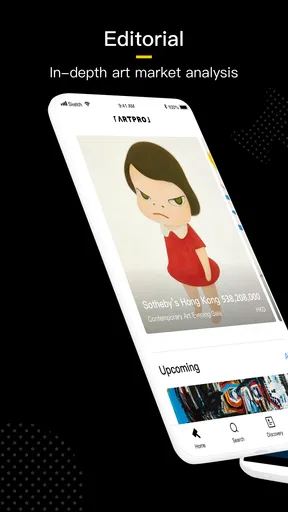
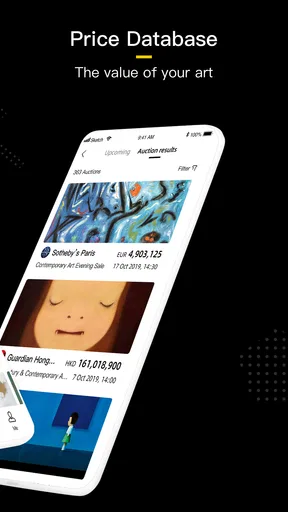
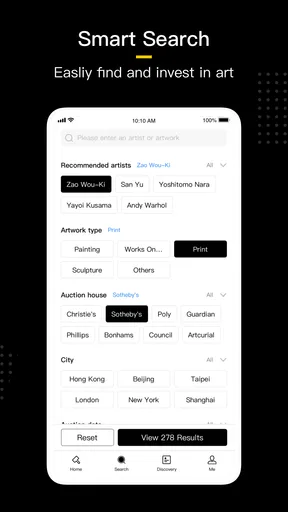
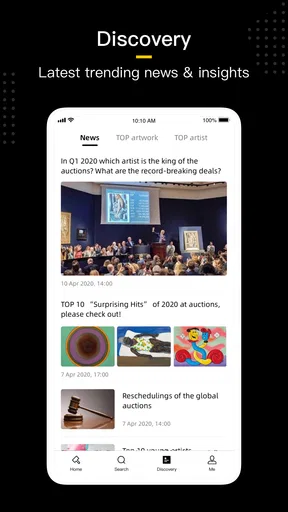
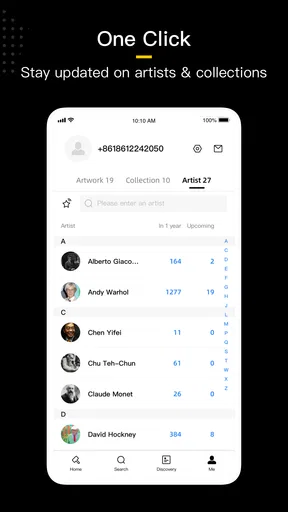
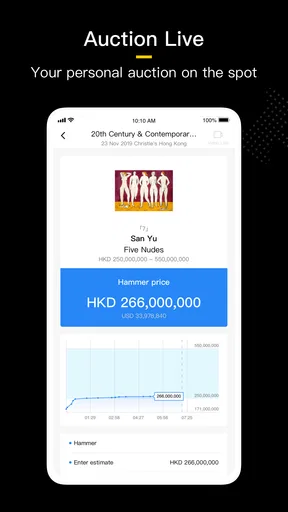
Our Review of ArtPro - Art Auction Results
 Analysis by Appyee
When I first opened ArtPro, I expected a narrow reference tool for people already comfortable with the art market. That impression is partly right, but the app is more approachable than its subject suggests. Its purpose is to help me search art prices and auction results, so the experience is less about making art and more about understanding what has happened in the market around a work, artist, or sale.
That distinction matters. This is not a gallery app for casually scrolling through beautiful images, and it is not a replacement for an auction house catalogue. I see it as a compact research companion: useful when I want to check a price history, compare results, prepare for a conversation, or decide whether a piece deserves deeper investigation. The app is free to install, with optional purchases ranging from $2.99 to $399.99 per item, so I would approach it as a tool to evaluate gradually rather than something to buy into immediately.
ArtPro sits in the Art & Design category and comes from ArtPro HK Limited. Its audience is rated Teen, which feels appropriate for a research-focused product rather than a child-oriented creative app. The current version is 3.134.56, and it works on Android devices running at least version 5.0. Those details make it accessible to many older phones, although the usefulness of a research app still depends heavily on how comfortable the screen and search experience feel on your particular device.
What the first week feels like
During the first few sessions, the strongest appeal is the feeling of having a focused place to investigate the financial side of art. Instead of jumping between general web searches, auction pages, image searches, and scattered notes, I can begin with the question that actually matters to me: what has this work, artist, or comparable piece achieved at auction?
That focus is especially useful for someone who is learning how the market speaks. Auction results are not simply numbers to memorize. They can help me notice differences between artists, periods, media, sizes, and sale contexts. Even when I am not making a purchase, searching results gives structure to a subject that can otherwise feel vague and intimidating.
A realistic everyday scenario would be preparing for a gallery visit. Before leaving, I might search an artist whose work I expect to see, review relevant auction results, and write down a few questions about provenance, condition, or comparability. The app does not replace the gallery conversation, but it helps me arrive with better questions instead of relying on a vague impression that a work “looks valuable.”
I also found the app more useful when I treated it as a comparison tool rather than an oracle. A single auction result can be misleading. A work may differ in size, medium, condition, date, or presentation, and those differences can matter enormously. My practical advice is to look for patterns across several results and then check whether the examples are genuinely comparable. That habit is one of the most important ways to avoid overreading a dramatic sale.
The first-week learning curve is not difficult in the same way as a professional database, but the subject itself demands patience. New users may search too broadly, see results that are not directly comparable, and assume the highest visible figure represents a normal expectation. I would slow down and build a small search routine: start with the artist, narrow by the most relevant work details, then compare multiple results before forming an opinion.
Who gets immediate value
I think the app is a good fit for beginning collectors, design students, art advisers, and curious viewers who want more context around prices. It can also help someone preparing to sell or inherit artwork, provided they understand that auction history is a starting point rather than a final valuation. The app gives those users a more informed basis for research than casual browsing alone.
It is less suitable for somebody who wants a social art feed, a digital sketchbook, or a simple catalogue of museum collections. If my main goal were to discover visual inspiration, save mood boards, or learn drawing techniques, I would choose a different kind of Art & Design app. ArtPro earns attention through information, not through creative tools or entertainment.
The public response is encouraging but still modest in scale: it holds a 4.5 average from 36 ratings, with one written review shown publicly, and has passed 10K+ installs. I read that as a sign of genuine interest rather than proof that it is universally polished. The rating suggests that the core idea works for people who need it, while the relatively small audience means I would keep my expectations realistic about community depth and broad-market refinement.
Does it remain useful after the novelty fades?
The first-week novelty comes from discovering how much information can be attached to a work or artist. The longer-term question is whether I will return once that curiosity has been satisfied. In my view, the answer depends on whether art research is already part of my routine. For an occasional browser, the app may be useful in bursts. For a collector or student, it has a clearer chance of becoming a recurring reference.
Month to month, I would use it around specific decisions rather than open it aimlessly. Before attending an auction, I could review comparable results. After seeing a work in person, I could investigate whether its apparent market position matches my initial impression. If I were building a collection around a particular artist, I could return periodically to understand how different works have performed instead of judging every new opportunity in isolation.
The best recurring habit is to keep a research notebook alongside the app. I would record the artist, work details, sale context, and my own interpretation rather than copying only the price. This prevents a common mistake: remembering a headline result while forgetting why it was unusual. ArtPro can support the search, but the judgment still belongs to me.
Another useful workflow is to separate “interest” from “action.” I might find an auction result that makes an artist look especially attractive, but I would not immediately treat that discovery as a buying signal. I would use the app to create a shortlist, then verify the work itself through the seller, catalogue information, condition details, and professional advice where appropriate. This makes the app more valuable because it becomes one stage in a careful process rather than the entire process.
For students and writers, the recurring value may come from building comparisons over time. Search results can provide examples for discussing market visibility, artist recognition, or the difference between critical reputation and auction performance. The app is particularly helpful when I need to move from a general statement such as “this artist is expensive” to a more grounded discussion of which kinds of works attract attention.
The maintenance burden is mostly intellectual
Using the app does not feel like maintaining a complicated creative project. The real burden is maintaining good research habits. I have to remember that auction prices are shaped by circumstances, that a result is not automatically a fair market value, and that older information may not answer a current question. The app can make searching faster, but it cannot remove the need to interpret what I find.
That is both a strength and a limitation. A beginner may want a neat answer after entering an artist’s name, while the responsible answer is often more conditional. If the app encourages me to compare results, it is doing something valuable. If I use it to chase one impressive number, I am using it badly.
I would also keep the app updated rather than treating an old installation as permanent. The release history includes the current version 3.134.56, and the minimum operating system is Android 5.0. Because search-based products depend on a functioning service and a usable interface, updates can matter more here than they would for a completely offline calculator. I would not buy a new phone just for this app, but I would make sure my device is not struggling with basic performance or display space.
The free entry point lowers the maintenance risk. I can test whether the search experience fits my needs before considering any optional purchase. That is important because the available in-app purchase range is wide, reaching as high as $399.99 per item. I would be especially cautious about spending at the upper end without first knowing exactly which research need it solves and how often I will use that benefit.
For a casual user, the free version may be enough to decide whether the app deserves a place on the phone. For a serious professional, the question is not simply whether paid access exists, but whether the information saves enough time or improves enough decisions to justify the cost. I would treat any purchase as a business decision, not as an automatic upgrade.
Where fatigue begins
The main source of fatigue is repetition. Searching art prices can be fascinating when I have a specific artist or work in mind, but less rewarding when I browse without a question. After the initial discovery period, the app may start to feel like a reference shelf: valuable when needed, quiet when not. That is not a flaw, but it means the app is unlikely to become a daily entertainment habit for most people.
Another possible frustration is the temptation to reduce art to auction figures. The app’s subject naturally pulls attention toward prices, while artistic importance, cultural context, condition, ownership history, and personal meaning cannot be summarized by a result. I would avoid using it as the only lens through which I evaluate art. Its narrow focus is useful precisely when I remember that it is narrow.
There is also a practical trade-off between speed and depth. A quick search may answer a simple question, but a serious comparison takes time. I need to inspect whether the works are similar enough, distinguish a notable result from a typical one, and keep the surrounding context in mind. Users hoping for an instant valuation may find that the app creates more questions than answers. For me, that is acceptable, because good research should sometimes slow down a decision.
The purchase structure may create a second kind of fatigue. A free app feels easy to try, but optional items priced from $2.99 to $399.99 can make me hesitate before exploring advanced value. I would not unlock anything impulsively. First I would use the available experience for a real task, note where it stops being sufficient, and then decide whether the specific purchase addresses that obstacle.
Compared with general web searching, ArtPro has the advantage of a more focused purpose. I do not have to begin with broad search results that mix galleries, news, advertisements, and unrelated pages. Compared with a specialist professional database, however, I would expect a more limited role: a convenient mobile research layer rather than the complete answer for high-stakes valuation or institutional work. That difference determines who should choose it. It is a practical companion for investigation, not a substitute for expert due diligence.
My long-term verdict
After the novelty fades, I would keep ArtPro installed if I were actively learning about the art market, collecting, studying art history, or regularly attending sales. Its recurring value comes from having a dedicated place to begin price and auction-result research. I would not open it every day without a reason, but I would appreciate having it ready when a real question appears.
I would skip it if I wanted a creative production app, a social discovery experience, or a broad visual catalogue. I would also avoid relying on it alone for a major purchase, estate valuation, insurance decision, or professional appraisal. In those situations, the app can support preparation, but specialist documentation and human expertise remain essential.
My strongest recommendation is to use it with a disciplined three-step process: search broadly enough to find context, narrow the comparison to genuinely similar works, and then verify the result through independent information before acting. That approach turns a potentially distracting price lookup into useful research. It also protects against the most obvious mistake, which is confusing an auction outcome with a guaranteed value.
The app’s free starting point makes that experiment easy, while the Teen rating and Android 5.0 compatibility keep the basic audience broad. ArtPro HK Limited has built something with a clear purpose rather than an overloaded collection of art-related tools. Its 4.5 average and 10K+ installs show that the idea has found an interested audience, though I see it as a focused niche utility rather than an essential app for everyone.
In the end, I recommend it to readers who want to make art-market research more deliberate. It earns lasting space not through constant novelty, but through occasional usefulness: the moment before an auction, during a collecting decision, while studying an artist, or when a price needs context. If those moments occur in my life, ArtPro is worth keeping nearby. If they do not, the app may become an interesting experiment that I rarely reopen.
My final advice is simple: use ArtPro to ask better questions, not to outsource your judgment. That is where its long-term value is strongest, and it is also the boundary that keeps its price-focused approach from becoming misleading.
Verdict
Strengths of ArtPro - Art Auction Results
- Useful auction-price data for researching artworks and artists.
- Helps compare past sales before buying or bidding.
- Search tools make it easier to find specific artists or works.
- Can support collectors with market-trend and valuation research.
- Convenient access to art-market information on a mobile device.
Limitations of ArtPro - Art Auction Results
- Coverage may vary depending on the artist, auction house, or region.
- Some advanced data or features may require a paid subscription.
- Auction results do not guarantee an artwork’s future market value.
- Results can be difficult for beginners unfamiliar with art-market terms.
- Requires an internet connection to access current auction information.
Similar Picks in This Category
View All
Canva: AI Photo & Video Editor
Canva4.8

PENUP – Drawing-sharing SNS
Samsung Electronics Co., Ltd.4.5

Crafto
Kutumb App4.6

Sketchbook
Sketchbook4.1

ibis Paint X
ibis inc.4.5

Adobe Express: AI Photo, Video
Adobe4.6
Frequently Asked Questions
What is ArtPro - Art Auction Results used for?
ArtPro - Art Auction Results is designed for people who want to research the performance of artworks and artists at auction. It can help users explore previous sales, compare results, follow market activity, and make better-informed decisions when collecting, studying, valuing, or monitoring art. It is primarily a research and reference tool rather than a platform for directly purchasing artwork.
What kind of auction information can I find in ArtPro?
The app focuses on auction-related data, allowing users to search for artists and review available results connected with their works. Depending on the artist and database coverage, information may include sale prices, auction dates, artwork titles, mediums, dimensions, auction houses, and other details. The amount of information can vary considerably between artists, periods, regions, and individual lots.
Is ArtPro - Art Auction Results suitable for professional collectors and dealers?
ArtPro can be useful for collectors, dealers, researchers, students, and anyone interested in the art market because it provides a convenient way to consult auction history from a mobile device. However, its results should be treated as supporting research rather than a complete valuation report. Professionals should also verify details with auction-house records and consider condition, provenance, authenticity, and market context.
Can I rely on the prices shown in ArtPro as the current value of an artwork?
Auction prices displayed in the app should not be interpreted as guaranteed current market valuations. A previous result reflects a specific artwork, condition, provenance, sale location, date, bidding environment, and applicable fees. Similar-looking works can achieve very different prices. For an accurate appraisal or selling decision, compare multiple results and consult a qualified art expert or auction specialist.
Does ArtPro require an internet connection or paid access?
Because ArtPro provides searchable auction-market information, an internet connection may be needed to load, update, or search its database, although the exact offline functionality depends on the version installed and the device being used. Some features or data access may also be limited by subscriptions, in-app purchases, or account requirements. Check the current store listing before downloading for pricing and access conditions.
